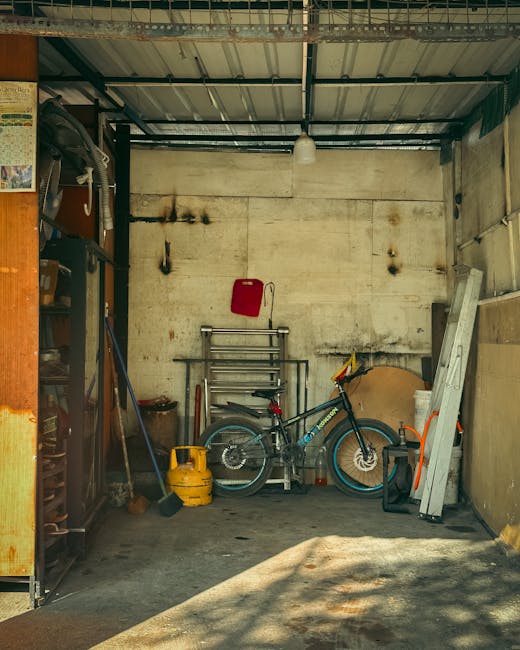
Garage Clearance Case: Removing 2 tonnes in Brixton

If your garage has turned into a hard-to-open storage cave, you are not alone. Boxes, broken furniture, old paint tins, tyres, odds and ends from three different jobs ago - it piles up quietly until one day you realise you are standing in front of 2 tonnes of clutter and wondering where on earth to start. This Garage Clearance Case: Removing 2 tonnes in Brixton looks at exactly that kind of job: how a large garage clearance works, what makes it different from a small tidy-up, and what you should expect if you want the space back without the stress.
Brixton adds its own twist. Tight streets, terraced homes, shared access, parking pressure, and the usual London timing puzzle can all affect how a clearance runs. The good news? With a sensible plan, the right equipment, and a clear method, a heavy garage clearance can be handled cleanly and efficiently. In this guide, we'll walk through the practical side of it, from planning and lifting to waste sorting, compliance, and the little details people often miss until the van is already outside. To be fair, that's usually when the panic starts.
Why Garage Clearance Case: Removing 2 tonnes in Brixton Matters
A 2-tonne garage clearance is not just "a bigger tidy". It is a proper removal job with moving parts: access, sorting, lifting safety, recycling routes, and time management. In Brixton, that matters even more because many properties have compact drives, narrow front access, shared stairways, or street parking that can make a simple collection surprisingly awkward.
What usually looks like clutter is often a mixed load. You may find old timber shelves, metal shelving, cracked storage boxes, bike frames, garden tools, white goods, offcuts, and a few mystery items that nobody remembers buying. When the volume gets this high, the risk is not only mess. It is injury, damage to the property, and delays if the waste is not separated properly.
There is also the emotional side. Garages tend to become the last dumping ground in a home. People keep meaning to sort them out. Then life gets busy, the door gets harder to close, and the whole space starts feeling like a small source of background stress. Clearing it properly can change how the whole property feels. You will notice it the moment the floor is visible again.
For homeowners, landlords, estate managers, and even small businesses using a garage for storage, this kind of clearance can restore usable space quickly. That makes it useful not just for tidiness, but for value, access, and day-to-day practicality. Need to park a car again? Set up a workshop? Prep a property for sale or let? A heavy garage clearance can be the difference between a space that helps you and one that quietly gets in the way.
Key takeaway: A 2-tonne garage clearance is really a logistics job disguised as a tidy-up. The more mixed and bulky the waste, the more important planning, sorting, and safe handling become.
How Garage Clearance Case: Removing 2 tonnes in Brixton Works
Most large garage clearances follow a simple structure, though the details change from property to property. The basic idea is to assess the load, work out safe access, separate reusable or recyclable items where possible, and remove everything in a controlled sequence.
The first step is usually a visual assessment. That means looking at what is stored, how much of it is loose, how much is stacked, and whether anything needs special handling. Old paint, chemicals, oily rags, batteries, fridges, or electrical items may need separate treatment. A garage full of dry household clutter is one thing; a garage full of mixed waste is another. Very different day at the office.
Next comes the loading plan. With 2 tonnes involved, there is no benefit in improvising. The team needs a clear route from garage to vehicle, plus an idea of what can be moved first. Heavy items often need to come out before lighter loose material, otherwise you end up trapped behind a wall of broken bits and bags. That sounds dramatic, but it happens more often than people think.
Then comes the actual removal. On a typical job, the flow may include:
- isolating bulky items first, such as cabinets or shelving
- separating recyclable materials where practical
- bagging loose waste to control dust and fragments
- moving heavy loads in stages to avoid strain
- clearing the floor last so the garage can be swept out properly
Once everything is out, the final stage is often overlooked: a basic clean-down. That does not mean a deep clean unless agreed, but it does mean removing loose debris, checking corners, and making sure the space is left safe and usable. If you are planning to reuse the garage immediately, this little step is a lifesaver.
In Brixton, timing can matter just as much as the physical work. Parking restrictions, busy roads, and neighbour access all play a role. A clearance that starts on paper in 60 minutes can easily stretch if the van cannot get close enough or the waste has to be carried further than expected. Sensible planning avoids that headache. Simple, but not always easy.
Key Benefits and Practical Advantages
The obvious benefit of clearing 2 tonnes from a garage is space. But honestly, the practical gains go well beyond "more room". When a garage is cleared well, it changes how the property functions.
- Better access: You can reach stored items without moving ten other things first.
- Improved safety: Fewer trip hazards, unstable stacks, and sharp or dusty objects underfoot.
- More usable space: Parking, storage, hobby work, or home improvements become possible again.
- Cleaner air and surfaces: Less dust, rust, mould-prone cardboard, and rodent-attracting clutter.
- Faster property prep: Helpful before a sale, tenancy change, refurbishment, or family move.
- Less stress: A garage that works again tends to make the whole home feel calmer.
There is also an efficiency benefit. Large clearances are often cheaper and smoother when handled in one organised visit rather than as a series of small ad hoc trips. Splitting a job up sounds manageable, but it can actually be more disruptive and leave you with half-cleared corners that become permanent. You know how that goes.
Another advantage is better waste separation. Good clearance teams can identify items that should be recycled, reused, or treated separately. That reduces landfill dependency where possible and gives you a more responsible outcome. Even if the garage contents are messy, the disposal process does not have to be. That is a small but meaningful distinction.
Who This Is For and When It Makes Sense
This kind of clearance is not only for people with extreme clutter. It suits a wide range of practical situations. If your garage has become a storage overflow for the rest of the house, a 2-tonne removal might be exactly the point where a proper service makes more sense than a DIY weekend.
It often makes sense for:
- homeowners who need the garage back for parking or storage
- landlords preparing a property for new tenants
- families dealing with inherited items or long-term accumulation
- people preparing to move house and needing to reduce bulk quickly
- small businesses storing archive items, packaging waste, or obsolete stock
- older property owners who need help with lifting and sorting
It can also be the right choice if the garage contains awkward items like broken cabinets, old mattresses, white goods, or mixed debris that would be time-consuming to dispose of individually. A few light items? You might manage that yourself. Two tonnes of mixed materials with limited access? That is a different story entirely.
One real-world pattern we see is this: a homeowner starts by saying, "It's only a few bits." Then they open the garage and realise the floor is invisible. It happens. The job doesn't suddenly become impossible, but it does become one that benefits from proper planning and realistic expectations.
Step-by-Step Guidance
If you want a garage clearance to go smoothly, the process matters. Here is a practical step-by-step guide that works well for heavier clearances in Brixton and similar London settings.
1. Take an honest look at what is there
Start by opening the garage and identifying the big categories: bulky furniture, tools, household junk, recyclables, electricals, and anything hazardous. The point is not to catalogue every item like a museum archive. It is simply to avoid surprise piles on the day.
2. Decide what must stay
Before anything is removed, separate the items you want to keep. That sounds obvious, but in practice it is where mistakes happen. Put those items in a marked corner or another room. If it matters to you, remove it from the clearance zone early. No exceptions.
3. Check access and parking
Measure the practical route. Can a van stop nearby? Is there space to carry items out safely? Are there gates, steps, or tight corners? In Brixton, access planning can save more time than almost anything else. It's the difference between smooth and slightly chaotic.
4. Break the waste into sensible groups
Separate large, rigid items from loose debris. Put recyclable materials together if possible. If there are electrical items, containers that may have held liquids, or anything suspicious, set them aside so they can be assessed properly. This is where a little organisation pays off big time.
5. Remove heavy items first
Start with the awkward pieces that block the rest of the job. Once the bulky items are out, the lighter material can be bagged and moved more efficiently. That approach reduces strain and clears the route for later stages.
6. Load in a controlled sequence
Good loading is not random. Heavy items go in first, lighter and more compressible items follow, and fragile or awkward pieces are handled carefully so nothing shifts badly in transit. A rushed van load is how avoidable problems happen.
7. Sweep and check the space
After removal, look for nails, broken glass, screws, splinters, dust, or forgotten small items in corners. A proper finish is not glamorous, but it matters. It leaves the garage ready for its next use rather than half-finished.
8. Decide on the next use immediately
Once the garage is clear, do not let it become a blank canvas for new clutter. Define what the space is for, even roughly. Parking? Seasonal storage? A home gym? Tool bench? If you skip this part, the garage often drifts back to its old habits. Strange how that works.
Expert Tips for Better Results
Over time, the best garage clearances tend to share the same habits. Nothing flashy, just good judgement and a calm approach. Here are the details that make a real difference.
- Separate by material, not just by item: wood, metal, cardboard, electricals, and general waste are easier to manage when grouped sensibly.
- Do the fragile stuff last: broken glass, cracked containers, and loose sharp objects are easier to manage once the heavier clutter is gone.
- Keep one clear walking lane: even a narrow safe path reduces fatigue and accidents during a large job.
- Use bags sparingly for dense waste: overfilled sacks are awkward and can tear. Not worth it.
- Have a "decision bin": if you are unsure about a keep/donate/dispose item, set it aside separately and revisit it later.
- Schedule around daylight and traffic: a daylight clearance usually goes more smoothly, especially when parking and access are tight.
One small but useful tip: if there are multiple people involved, agree on what counts as "keep" before the lifting starts. It avoids the classic moment where someone says, "Wait, that was meant to stay." That is the kind of sentence nobody enjoys hearing halfway through a garage empty-out.
Also, don't underestimate dust. Old garages can hold surprising amounts of fine dust, dried leaves, insulation fragments, and grit. If you are sensitive to that sort of thing, protective gloves and a face covering can be worth having to hand. Nothing dramatic. Just sensible.
Common Mistakes to Avoid
Heavy garage clearances tend to go wrong in predictable ways. The good news is that most of them are easy to avoid once you know what to look for.
Leaving sorting until the last minute
If everything is thrown together, the clearance takes longer and recycling opportunities get lost. Even a basic pre-sort can make the day much smoother.
Underestimating access problems
Many people focus on the contents and forget the route out. A narrow path, a parked car, or a locked side gate can slow the job more than the weight itself.
Ignoring hazardous items
Old paint, chemicals, batteries, and electrical equipment should not be mixed blindly with general rubbish. They need a bit more care.
Trying to lift too much at once
It sounds efficient. It often isn't. Heavy loads should be handled in smaller, safer stages.
Not confirming what "clear" means
Some people want a full empty-out. Others want the garage swept, but not scrubbed. Make the end point clear before the work starts.
Forgetting about disposal restrictions
Certain items cannot simply be treated like ordinary rubbish. If you are not sure, ask before the job begins rather than discovering the issue later.
A lot of frustration comes from assumption rather than the job itself. Truth be told, most clearances run better when both sides are slightly more specific than they think they need to be.
Tools, Resources and Recommendations
You do not need a huge toolkit to plan a garage clearance, but a few practical items can make the process far more manageable.
- Strong gloves: useful for sharp edges, rough timber, and dusty materials.
- Bin bags or rubble sacks: for loose lightweight waste, though very dense loads may need sturdier handling.
- Labels or tape: helps mark keep piles, recycling piles, and items for review.
- Dust sheets or blankets: useful for protecting door frames, floors, or items staying in the property.
- Flashlight: garages often have dark corners, and that is where forgotten items hide.
- Trolley or sack truck: helpful for heavier, stable items with safe loading points.
From a service perspective, it is worth looking at related clearance options if your garage is only one part of a bigger job. For example, if you are also clearing a loft, garden, or the whole property, it may be more efficient to think in terms of a broader service. Relevant pages on garage clearance, home clearance, and property clearance can help you understand how different types of removal fit together.
If the garage contains bulky furniture or awkward household items, those may be better handled through furniture removal and collection or bulky waste collection. For mixed waste or larger jobs, pages on waste removal and rubbish clearance can also be useful reference points.
If you want to think about the broader disposal side, the site's information on recycling and sustainability is worth a look. A garage clearance does not have to be "dump everything and move on". Often, a lot of the load can be directed into more sensible waste streams.
Law, Compliance, Standards, or Best Practice
For a garage clearance in Brixton, the main compliance point is simple: waste should be handled responsibly and passed to a legitimate carrier or disposal route. In the UK, that generally means using a service that understands correct waste handling, segregation, and transfer procedures. The details can vary by item type, but the principle stays the same.
Hazardous or specialist waste needs extra care. Items such as chemicals, solvents, batteries, and some electrical goods should not be treated as ordinary mixed rubbish. If there is uncertainty, it is better to flag the item early rather than assume it can go in with the rest. That small pause can save a lot of trouble later.
Health and safety also matter. Good practice includes safe lifting, clear walkways, sensible stacking, and avoiding overloading bags or carrying loads that are too awkward to control. For larger jobs, this is not just about comfort. It is about reducing the chance of injury and property damage.
It is also worth being aware of how local access and parking issues can affect the job. Brixton streets can be busy, and that affects where loading happens and how long the team needs on site. A good plan accounts for that rather than pretending it will sort itself out. Sometimes it does, often it doesn't.
For service reassurance, you may also want to review the company's insurance and safety information, plus its health and safety policy. If you are comparing service providers, those pages are helpful because they show whether the company takes practical risk management seriously rather than just talking about it.
And if you are pricing the job carefully, the page on pricing and quotes can help set expectations before anything is booked. That matters on bigger clearances. Nobody likes hidden surprises, especially when the garage already contains enough of them.
Options, Methods, or Comparison Table
There are a few ways to deal with a large garage clear-out. The right choice depends on time, access, physical effort, and how mixed the waste is.
| Method | Best for | Pros | Trade-offs |
|---|---|---|---|
| DIY clear-out | Small loads, simple sorting, plenty of time | Full control, potentially lower direct spend | Time-consuming, heavy lifting, disposal logistics on you |
| Mixed waste collection | Bulky clutter with several material types | Faster, easier for larger loads, less manual effort | Needs clear access and good item sorting where required |
| Full clearance service | Heavy accumulation, large properties, urgent deadlines | Most efficient, more hands, better for 2-tonne jobs | May be more involved to arrange if access is tight |
For a 2-tonne garage clearance, DIY is often the least comfortable option unless the load is unusually manageable. It is not impossible, of course. People do it all the time. But once you add stairs, limited parking, mixed materials, and time pressure, the attraction of a professional clearance becomes obvious. Almost boringly obvious.
A blended approach can also work. You might remove a few personal items yourself, then have the remaining bulk handled as a full clearance. That can save time and money while still keeping the heavy work off your shoulders.
Case Study or Real-World Example
Here is a practical example based on the kind of job this article is about. A Brixton homeowner had a garage filled over many years with old shelving, garden pots, broken storage boxes, a dismantled wardrobe, sports equipment, and a stack of miscellaneous household items that had moved from one house corner to another and never quite left.
At first glance, it looked like a light half-day job. Then the pile was measured properly and the load was estimated at around 2 tonnes. Some of it was loose, some was awkwardly stacked, and several items had to be separated for handling. The access was straightforward enough, but parking and carry distance were still factors.
The solution was simple but disciplined: sort the obvious keep items first, remove bulky pieces in stages, bag the loose material separately, and keep a clear route from garage to vehicle. The garage was left swept and ready for future use. No magic. No drama. Just a well-managed job.
The homeowner's reaction, as it happens, was the same one we hear often: "I should have done that years ago." There's a reason that line keeps coming up. A cluttered garage can become invisible in daily life until the moment it isn't. Once it is cleared, the difference feels bigger than the job itself suggested.
Practical Checklist
Use this checklist before the clearance day arrives. It keeps the job more organised and reduces avoidable delays.
- Identify what needs to stay and remove it from the garage
- Group waste into bulky items, loose waste, recyclables, and special items
- Check access, parking, gates, and any steps or narrow points
- Set aside anything that may need separate handling
- Clear a walking route through the garage if possible
- Confirm the expected load size and the likely end result
- Protect nearby walls, floors, or fixtures if needed
- Make sure the garage is safe for loading and moving items
- Plan where the cleared items will be taken next
- Decide how the space should be used once empty
Quick pre-job reminder: if there is one thing you do before the team arrives, make it the "keep" pile. That single step prevents a surprising amount of confusion.
Conclusion
A garage clearance involving 2 tonnes in Brixton is not a small tidy-up, but it is absolutely manageable when approached with a clear method. The key is to treat it as a structured removal job: assess the load honestly, plan for access, separate waste sensibly, and handle the heavy lifting safely. Done well, the result is not just an empty garage. It is a space that becomes useful again.
That matters more than people expect. A clear garage can make everyday life easier, reduce stress, and give you back a bit of breathing room in a busy home. And in a place like Brixton, where space is always earning its keep, that extra room is no small thing.
If you are comparing options, thinking through access, or trying to decide whether a full clearance is the right move, take the time to plan properly. A little attention up front makes the whole process feel calmer, cleaner, and more predictable. And honestly, that is what most people want in the end.
Get a free quote today and see how much you can save.
Frequently Asked Questions
How long does a 2-tonne garage clearance in Brixton usually take?
It depends on access, how mixed the contents are, and whether the garage is packed from floor to ceiling. A straightforward job can be relatively quick, while a cramped or heavily mixed clearance takes longer because sorting and safe lifting take priority.
What counts as 2 tonnes in a garage clearance?
It usually means a very substantial load: a combination of bulky items, dense clutter, bagged waste, timber, metal, and general household or workshop materials. It is less about the exact number and more about the fact that the load is large enough to need proper planning.
Can you clear a garage if there is limited parking outside?
Yes, but access needs to be planned carefully. Limited parking can affect the route to the vehicle and the time required on site, so it is better to flag that early rather than treat it as a small detail.
Do I need to sort everything before the clearance?
No, not necessarily. A basic sort helps a lot, though. At minimum, remove personal items you want to keep and set aside anything that may need special handling. That alone can make the job much smoother.
What happens to recyclable garage waste?
Where practical, recyclable materials such as metal, cardboard, and some hard materials can be separated from general waste and handled appropriately. The exact route depends on the item type and condition.
Is a garage clearance better than using council collection?
For a large mixed load, often yes. Council collection can be useful for certain items, but a big garage clearance usually involves more volume, more sorting, and more hands on deck than a standard collection can comfortably handle.
What if my garage contains old paint, batteries, or chemicals?
Those items need more care than ordinary waste. They should be identified early so they can be handled separately rather than mixed into the general load.
Will the garage be left clean afterwards?
Most clearance jobs include sweeping and a basic tidy of the cleared space, but not every service includes deep cleaning. It is best to confirm the end point in advance so expectations are clear.
Can I stay in the property while the clearance is happening?
Yes, in most cases. Many people do. It can actually help if you are available to confirm keep items or answer quick questions during the job.
How do I know if I need a full clearance instead of a simple collection?
If the garage is heavily packed, contains many mixed item types, or needs significant lifting and sorting, a full clearance is usually the better fit. If it is only a small number of separate items, a simpler collection may be enough.
Are there any special issues with garage clearances in Brixton specifically?
The main considerations are access, parking, and street space. Brixton can be busy, so good timing and clear loading arrangements make a noticeable difference. The waste itself is one part of the job; the logistics around it are often the other half.
What should I do before the team arrives?
Remove anything you want to keep, identify risky or awkward items, and make sure the garage entrance is accessible. If you can do only one thing, make the keep pile clear and obvious. That saves everyone time.