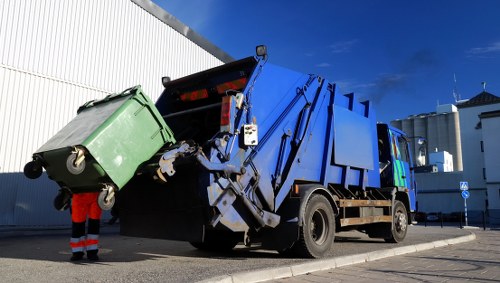
 At Trash London we believe that sustainable waste management is a shared citywide responsibility. Our Trash London recycling and sustainability programme is designed to work with boroughs, residents and local businesses to increase recycling rates while reducing carbon emissions from collection and transfer. Our immediate recycling percentage target is 65% by 2030, a stretch goal aligned with wider London ambitions and local authority plans.
Recycling and Sustainability with TrashLondon
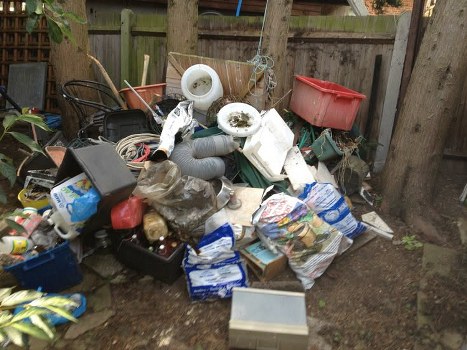 Trash London recycling services focus on clarity and consistency: separate streams for food waste, dry recyclables and residual waste where borough schemes allow, plus targeted collections for textiles and small electrical items. We coordinate with council schemes that emphasise kerbside separation of glass, paper and card, plastics and cans, as well as communal textile banks in multi-occupancy housing. Clear labelling and regular community outreach help keep contamination low and diversion rates high.
Local Transfer Stations and Efficient Hubs
 To reduce haul distances and emissions we use a network of local transfer stations across London. These hubs are sited to serve inner and outer boroughs and include transfer points that operate near South and East London clusters, serving boroughs such as Southwark, Lewisham and Wandsworth. By consolidating loads at nearby transfer stations we cut vehicle miles, speed up turnaround, and improve recycling quality by directing materials straight to the right reprocessors.
Our approach to transfer logistics is flexible and data-driven: route planning software helps us match collection frequency to seasonal demand, and real-time load monitoring reduces unnecessary journeys. We also prioritise transfer facilities that accept separated streams — organics, mixed dry recycling, glass and metal — to maximise recovery.
Partnerships with Charities and Social Enterprises
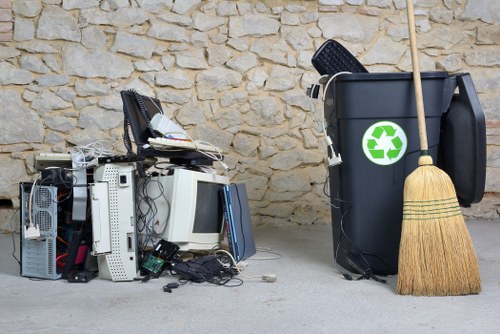 Trash London works closely with local charities and reuse organisations to divert usable goods from the waste stream. Through partnerships with community redistribution groups, food rescue projects and social enterprises (including well-known London-based initiatives and smaller neighbourhood reuse schemes), we ensure that furniture, clothing and working small electricals find new homes where possible rather than being recycled or landfilled.
We support charity-led waste reduction by:
- setting aside separated bulky items for repair and reuse rather than immediate disposal;
- supporting community reuse centres in boroughs with on-street bulky collection services;
- donating surplus materials suitable for social projects, training and refurbishment.
Low-Carbon Vans and Fleet Modernisation
 A cornerstone of our low-emission strategy is switching to low-carbon vans for last-mile collections. Trash London operates a growing fleet of electric and hybrid vans on inner-London rounds, and low-emission Euro-standard vehicles on longer suburban runs. These vehicles reduce tailpipe emissions in densely populated areas and contribute directly to better air quality.
We also employ low-noise, low-carbon vehicles for night collections where permitted, minimising disturbance while maintaining efficient service. Investment in depot charging infrastructure and driver training — for eco-driving techniques and efficient route choices — further reduces fleet carbon intensity.
Across boroughs the practical recycling activities we support reflect local policies: many boroughs favour separate food waste collections, communal glass banks, and targeted garden waste services. At Trash London we tailor our operations to each council's collection model, whether that is a three-stream kerbside split, a dual-stream system or communal bin solution for flats. Flexibility and local knowledge are central to achieving our recycling targets.
Our monitored metrics include capture rates by material, contamination levels, and vehicle emissions per tonne collected. These KPIs enable us to refine collection frequencies, improve educational outreach and work with councils to adjust container types where needed — for example, switching to larger food waste containers in streets with high uptake.
Community engagement remains a priority: we run local workshops with housing associations, set up pop-up recycling events, and collaborate with borough communications teams to explain separation rules. These initiatives are vital to reducing contamination and increasing the amount of material genuinely recycled.
TrashLondon's waste prevention work complements recycling: we encourage reuse through collection pathways for repairable items, and we support textile collection drives with local charities. Our teams liaise with parish and community groups to coordinate collections that feed reuse hubs and vocational training projects.
Operational transparency is part of our sustainability promise. We publish aggregate performance updates with borough partners, showing progress toward our 65% recycling percentage target and detailing reductions in fleet emissions. Data-driven transparency helps build trust and focus resources where they have the biggest environmental return.
Finally, Trash London sustainability efforts are practical and local: by combining targeted recycling activity — food waste, glass, paper, textiles and small WEEE — with partnerships, local transfer stations and a modern low-carbon van fleet, we deliver efficient, responsible London trash services. Together with residents and councils, we are turning today’s rubbish into tomorrow’s resources.