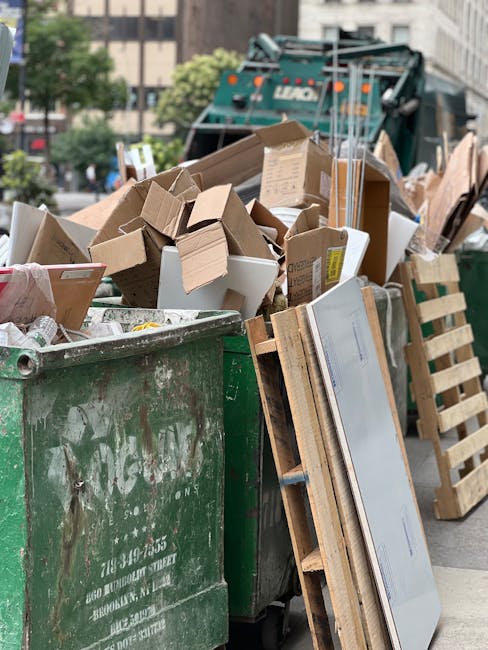
Rubbish collection Oxford Street shop waste solutions: a practical guide for busy retail spaces
Oxford Street moves at its own pace. Deliveries arrive early, shoppers stream past all day, and by closing time the back room can look like a small mountain range of cardboard, packaging, broken displays, old stock, and general shop waste. If you run a retail unit here, Rubbish collection Oxford Street shop waste solutions are not just a tidy-up job; they are part of keeping the business safe, presentable, and workable.
Truth be told, retail waste builds up faster than most people expect. One fixture change, one seasonal refresh, one stock clearance, and suddenly you need a plan. This guide breaks down how shop waste collection works, what to look for, where businesses often go wrong, and how to choose a sensible solution that fits a high-footfall London location. No fluff. Just the practical stuff that helps you keep things moving.
- Why it matters
- How it works
- Key benefits and practical advantages
- Who this is for and when it makes sense
- Step-by-step guidance
- Expert tips for better results
- Common mistakes to avoid
- Tools, resources and recommendations
- Law, compliance, standards, or best practice
- Options, methods, or comparison table
- Case study or real-world example
- Practical checklist
- Conclusion
- Frequently asked questions
Why Rubbish collection Oxford Street shop waste solutions Matters
On a street like Oxford Street, waste is never just waste. It affects how a shop looks, how staff move, how stock is handled, and how quickly the store can reset after a busy day. A pile of flattened boxes near the fire exit is inconvenient at best and a real obstruction at worst. Add food packaging, damaged fittings, and mixed retail refuse, and the back-of-house area can become cramped in no time.
Shop waste also has a public-facing side. Customers notice clutter, even if they do not consciously register it. An overflowing bin by the entrance or bags left too long on the kerb send the wrong signal. In a premium retail location, that matters. It says something about standards, and people do notice those little things, especially on a street where presentation is half the battle.
Then there is the operational side. Retail teams are busy. Staff should be serving customers, managing stock, and keeping the floor presentable, not improvising waste runs because no one planned for them. A structured rubbish collection service reduces the daily scramble and gives the store a rhythm. That rhythm matters more than people think.
Expert summary: the best shop waste solution is not necessarily the cheapest or the fastest. It is the one that fits your opening hours, access limits, storage space, waste volumes, and compliance responsibilities without getting in the way of trading.
How Rubbish collection Oxford Street shop waste solutions Works
For most shops, the process starts with a simple assessment. What kind of waste do you produce, how much of it, and how often does it appear? A fashion retailer will likely generate lots of cardboard, film wrap, garment hangers, and packaging. A convenience store may produce mixed waste, broken crates, and occasional bulky items. A cosmetics shop can have more small packaging, display materials, and old promotional stock than you might expect. Different waste streams need different handling. That is the boring bit, but it is the bit that keeps everything smooth.
From there, a collection plan is built around access and timing. On Oxford Street, access can be the tricky part. Loading restrictions, narrow service windows, foot traffic, and shared building access all play a role. A good collection setup usually considers:
- the size and type of waste containers needed
- the best collection frequency
- where waste can be stored safely before pickup
- how waste will be separated for recycling, where possible
- what time collections can happen without disrupting trading
Some shops need a regular scheduled collection. Others only need one-off clearances after a refit, stockroom purge, or end-of-season reset. In practice, many businesses use a blend of both. A recurring service handles the day-to-day waste, while a separate clearance takes care of the awkward stuff: old shelves, damaged stock, packaging mountain no one wants to look at, that sort of thing.
When the collection day arrives, the waste is removed, loaded, and taken to the appropriate facility for sorting, recycling, or disposal. The important part is not just the removal itself. It is whether the waste goes where it should, with the right paperwork and safe handling. That is where professional service becomes more than a van and a pair of gloves.
Key Benefits and Practical Advantages
There are some obvious benefits, and a few less obvious ones. The obvious ones are easy to spot: a cleaner store, less clutter, and fewer complaints from staff. The less obvious ones can have a bigger long-term impact.
- Better shop presentation: customers see a cleaner, more organised retail environment.
- Safer working areas: fewer trip hazards, blocked exits, and awkward manual lifting moments.
- More efficient stock handling: staff can move around the back room without playing Tetris with waste bags.
- Less pressure on in-house teams: employees can focus on trading rather than waste logistics.
- More reliable recycling: clearer separation often means better material recovery.
- Fewer last-minute emergencies: a planned service is calmer than a panic clear-out at 7:45 p.m. on a Friday.
There is also the comfort factor. Anyone who has tried to run a shop through a busy seasonal change knows the stress of waste building up behind the scenes. It is one more thing tugging at attention. When collections are handled properly, the store feels lighter. Not glamorous, maybe, but noticeably easier to run.
For multi-site retailers, there is another gain: consistency. A standard process across branches makes it easier to monitor waste, compare performance, and spot recurring problems. If one location always generates excess cardboard or irregular bulky waste, you can see it earlier and plan accordingly.
Who This Is For and When It Makes Sense
This kind of service is useful for any retail business that regularly produces waste and has limited room to manage it safely. On Oxford Street, that includes more businesses than you might first think.
- Fashion and clothing stores: packaging, hangers, display changes, stock rotation, and seasonal clear-outs.
- Electronics retailers: bulky packaging, damaged stock, demo units, and old fixtures.
- Beauty and cosmetics shops: smaller packaging volumes, promotional waste, and frequent store refreshes.
- Food-adjacent retailers: mixed waste, cardboard, cleaning waste, and storage constraints.
- Pop-up shops and temporary retail units: fast setup, fast breakdown, and not much space to spare.
- Refit and relaunch projects: when you need the site cleared before contractors arrive.
It makes sense to arrange a dedicated solution when waste starts affecting trading, staff movement, or compliance. If the back room is always full, if bins are overflowing before collection day, or if you are stacking cardboard in a way that makes people mutter under their breath, you are already past the point where a casual approach works well.
A good rule of thumb: if waste is something the team keeps having to work around, rather than something that disappears neatly in the background, you need a better system.
Step-by-Step Guidance
Here is the straightforward way to approach shop waste collection without making it more complicated than it needs to be.
- Identify the waste types. Separate cardboard, recyclables, mixed refuse, and bulky items. Do not wait until everything is mingled together in one sad pile.
- Measure the volume. Think about average weekly output and peak periods. Christmas, sale events, and refits can all change the picture fast.
- Check your storage space. Make sure bins, cages, or sacks can be kept safely out of customer areas and away from fire exits.
- Map access and timings. In a busy area, collection windows matter. Early morning may work better than midday, and sometimes much better.
- Choose the right service style. Some businesses need scheduled collections, others benefit from ad hoc clearances, and many need both.
- Set internal responsibilities. Decide who breaks down cardboard, who logs collections, and who calls for a clearance when needed.
- Review monthly. Waste patterns shift. If one shipment style changes or a new display system creates more packaging, adjust the plan.
It sounds simple, and mostly it is. The trick is consistency. A tidy collection system is less about one big clean-up and more about lots of small habits done properly. Bit by bit, that makes a real difference.
Expert Tips for Better Results
In our experience, the best waste setups are the ones that quietly solve problems before anyone has to think about them.
- Keep cardboard flattened early. Waiting until the end of the week usually means a heavier, messier, harder-to-store job.
- Use labelled waste points. Staff are far more likely to sort correctly when the system is obvious.
- Match collection frequency to peak trading. A static schedule can work for months, then suddenly not work at all during seasonal peaks.
- Protect access routes. Keep corridors, stockroom doors, and service areas clear so collections happen without awkward manoeuvring.
- Train new staff quickly. One five-minute briefing can prevent a lot of confusion later.
- Plan for bulky waste separately. Old shelving, broken POS units, and damaged furniture often need their own arrangement.
One small but useful tip: take a quick photo of the waste area at its worst and its best. Not for social media, obviously. For planning. It helps you see patterns and spot whether the layout is working or quietly failing. Slightly unglamorous, yes, but very effective.
Also, do not let collections become a "someone will deal with it" task. That sentence is where problems breed. Better to assign ownership clearly, even if the job itself is simple.
Common Mistakes to Avoid
Waste management gets messy when businesses treat it like an afterthought. A few common mistakes come up again and again.
- Mixing everything together: recyclable cardboard, general refuse, and bulky items all in one place make the job harder and often more expensive.
- Ignoring peak periods: a quiet February and a frantic December are not the same beast.
- Leaving waste in customer-facing areas: even briefly, it can spoil the experience and create safety issues.
- Assuming one collection pattern fits forever: stores change, suppliers change, promotions change. Waste changes too.
- Forgetting access limits: if a vehicle cannot stop safely or staff cannot move waste to the pickup point, the plan falls apart.
- Not checking paperwork needs: for some waste types, records and transfer documentation matter. Skipping that step is a bad habit.
A slightly awkward truth: a lot of waste trouble is not really waste trouble at all. It is planning trouble. Fix the planning and the actual collection becomes much less dramatic.
Tools, Resources and Recommendations
You do not need a warehouse full of equipment to manage retail waste well. You do, however, need the right basics.
| Tool or resource | Why it helps | Best for |
|---|---|---|
| Labelled bins or cages | Helps staff separate waste correctly | Stores with multiple waste streams |
| Cardboard flattening tools | Reduces volume and storage pressure | Fashion, electronics, and seasonal retail |
| Waste log or collection sheet | Tracks frequency, volume, and recurring issues | Single stores and multi-site operators |
| Back-of-house layout plan | Makes storage and pickup routes safer | Busy shops with tight access |
| Dedicated bulky waste clearance | Handles fixtures, furniture, and one-off items | Refits, closures, and stock changes |
For broader waste handling, pages like recycling and rubbish and commercial waste collection can also be useful starting points if you want to understand how different waste streams are typically managed. If your shop occasionally needs to clear larger items, bulky waste collection and large item collection are worth knowing about too.
For businesses dealing with a full refit or clearance, the related services on office clearance and property clearance may also help you think through the logistics, even if your site is retail rather than office-based.
Law, Compliance, Standards, or Best Practice
Retail waste handling in the UK comes with responsibilities, especially for businesses that generate waste regularly. The details can vary depending on the type of waste and how it is collected, so it is sensible to follow current UK guidance and use a provider that understands business waste properly.
In plain English, best practice usually means this:
- store waste safely and securely
- keep pedestrian routes and fire exits clear
- separate recyclable materials where practical
- use a service that can handle commercial waste appropriately
- keep basic records where required
- make sure staff know what can and cannot go into each waste stream
That does not mean every shop needs to become a compliance expert. But it does mean you should not leave waste handling to guesswork. If a business is unsure about a particular material, such as mixed packaging, electrical items, or broken fixtures, it is better to check before disposal rather than assume. A cautious approach is usually the sensible one.
Health and safety also matter. Manual handling is a real issue in retail environments, especially when bins are heavy or waste has to be moved through narrow storage corridors. The better the layout and the clearer the process, the lower the risk. If you are setting up a more formal operation, pages like health and safety policy and insurance and safety can offer helpful context about the standards behind a safe service.
Options, Methods, or Comparison Table
Not every shop needs the same waste solution. Some need routine collections. Some need occasional help. Some need both because retail life likes to keep people guessing.
| Method | Best for | Pros | Watch-outs |
|---|---|---|---|
| Scheduled commercial collections | Regular retail waste | Predictable, simple, easy to budget for | Needs the right frequency to avoid overflow |
| One-off rubbish clearance | Refits, stock changes, clear-outs | Fast removal of bulky or awkward waste | May not suit ongoing daily waste |
| Mixed waste and recycling separation | Shops with varied packaging | Can improve recycling outcomes | Requires staff discipline |
| Bulk or large item pickup | Fixtures, displays, old furniture | Handles awkward items without clogging storage | Needs advance planning and access |
For most Oxford Street shops, the sweet spot is a combination: regular waste collection for the day-to-day load, then separate clearances when trading conditions change. That balance keeps the store tidy without overcommitting to a service you barely use.
Case Study or Real-World Example
Consider a mid-sized fashion retailer preparing for a seasonal reset. The shop has new stock arriving, old display units to remove, and several weeks' worth of cardboard stacked behind the till area. Staff are still trading, so the site cannot just be shut down for a full day. The challenge is not dramatic. It is just very real.
The first step is separating the waste into categories: packaging, mixed refuse, and bulky display items. Next, the team clears a temporary storage space in the back room so bags and flattened cardboard do not block access. A collection plan is then arranged in stages. The bulky display pieces are removed first, because they take up the most room and are the hardest to move. Then the cardboard is taken away, followed by the remaining general waste.
The result is less chaotic than a full strip-out done in one rush. Staff can keep trading. The floor looks better. The stockroom breathes again. Nothing flashy, just a smoother week. And sometimes that is the whole point.
What this example shows is simple: waste solutions work best when they match the rhythm of the shop. Not the other way around.
Practical Checklist
Use this quick checklist before booking or updating a shop waste collection plan:
- Have you identified all the waste types your shop produces?
- Do you know how much waste builds up in a normal week?
- Are there peak periods that need extra collection support?
- Is there a safe place to store waste before pickup?
- Are fire exits, corridors, and customer areas kept clear?
- Do staff know how to separate recyclable materials?
- Have you planned for bulky items and one-off clearances?
- Is your collection timing realistic for Oxford Street access and trading hours?
- Do you have a basic record of what goes out and when?
- Have you reviewed whether the current arrangement is still working?
If you can tick most of those off, you are in a good place. If not, that is fine too. It just means there is some easy housekeeping to do before waste becomes a bigger problem than it needs to be.
Get a free quote today and see how much you can save.
Conclusion
Good shop waste handling is rarely glamorous, but it is one of those behind-the-scenes systems that makes everything else easier. For Oxford Street retailers, the stakes are even higher because space is tight, footfall is constant, and presentation matters every single day. A well-planned rubbish collection solution helps keep the shop safe, tidy, and ready to trade without that low-level background stress that builds when waste is left to pile up.
The key is to match the service to your actual retail reality. Not the ideal version. The real one. Once you do that, waste stops being a recurring annoyance and becomes just another part of the operation that runs in the background, quietly doing its job. Which, let's face it, is exactly how it should be.
And when the back room is clear and the floor is calm, the whole store feels better. That matters more than people admit.
Frequently Asked Questions
What is included in shop waste collection on Oxford Street?
It usually includes the removal of day-to-day retail waste such as cardboard, packaging, mixed rubbish, and sometimes bulky items like fixtures or damaged displays. The exact scope depends on the shop and the service arrangement.
How often should a shop arrange rubbish collection?
That depends on waste volume and storage space. Busy stores may need frequent scheduled collections, while smaller or quieter units may only need periodic pickups. Seasonal peaks often justify temporary extra collections.
Is commercial waste different from regular household waste?
Yes. Commercial waste comes from a business, so it is usually managed under different expectations and responsibilities. Shops should use a collection method suited to business waste rather than relying on household-style disposal habits.
What happens to retail waste after collection?
It is typically taken to sorting, recycling, or disposal facilities depending on the waste type. Recyclable materials may be separated where practical, while general waste is handled through the appropriate waste route.
Can shop waste be collected outside trading hours?
Often yes, and in a busy location that can be very helpful. Early morning or out-of-hours collections can reduce disruption, though access rules and building arrangements still need to be considered.
What should a shop do with bulky items like old shelving?
Bulky items usually need a separate clearance arrangement. They are harder to store, move, and load than normal waste bags, so they should be planned for in advance rather than left until the last minute.
How can a retail store reduce waste collection problems?
Flatten cardboard early, label waste streams clearly, keep access routes open, and review collection frequency regularly. Small habits make a big difference, and they save staff from unnecessary hassle.
What are the most common waste mistakes in shops?
Mixing waste types, overfilling storage areas, ignoring peak trading periods, and leaving rubbish in customer-facing spaces are among the most common problems. They are easy to avoid once a clear system is in place.
Do shops need to separate recycling?
Where practical, yes. Separating cardboard, plastic packaging, and other recyclable materials can improve waste handling and reduce general rubbish volumes. The exact setup depends on the materials produced and the space available.
How do I know if my current waste solution is working?
If waste is regularly overflowing, creating clutter, slowing staff down, or causing safety concerns, the system needs attention. A good setup should feel almost invisible most of the time. If it keeps demanding attention, something is off.
Is a one-off clearance enough for a busy Oxford Street shop?
Usually not if the shop produces waste every day. One-off clearances are useful for refits, stock changes, and bulky waste, but many retailers also need regular scheduled collections to keep operations smooth.
Where can I find more information about broader waste services?
For broader planning, it can help to look at related pages such as rubbish collection, waste collection, and waste removal. Those pages give a wider view of how different collection and clearance services fit together for businesses and property owners.